
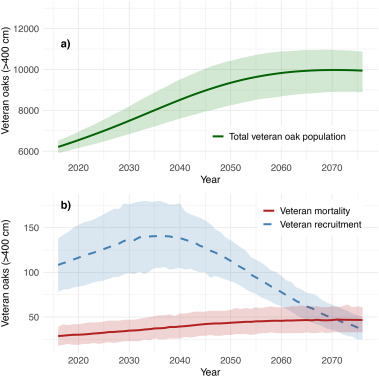
We assessed the long-term dynamics of veteran oaks (Quercus robur; >400 cm girth) in a parish (118 km2) in southern Sweden using repeated measurements from 1955 and 2012. Annual mortality of veteran oaks was low (0.45% yr−1; 95% CI: 0.16–0.81). Mean girth growth was 1.06 cm yr−1 (95% CI: 0.81–1.31). These estimates were combined with published data to project future dynamics of veteran oaks in Östergötland (9979 km2), where 18,260 oaks >314 cm girth were recorded between 1997 and 2016. The number of veteran oaks is projected to increase by 61%, from 6212 trees in 2016 to a peak of approximately 10,000 around 2070, driven primarily by the maturation of existing sub-veteran trees, reflecting demographic inertia rather than ongoing recruitment. Thereafter, the veteran population is expected to decline as recruitment falls below mortality. Maintaining the projected peak would require a sustained influx of approximately 62 trees per year into the sub-veteran class (≥334 cm girth, the smallest size consistently captured across the staggered county survey), implying the need for a continuous recruitment pipeline from younger cohorts. Despite the projected increase in numbers, the spatial clustering of veteran oaks persists, and approximately 13% of veterans still lack a near neighbour within 500 m by 2076, limiting landscape connectivity for dispersal-limited species. Our results highlight that current increases in veteran oak abundance are transient and emphasize the importance of long-term recruitment and spatial planning for sustaining these ecologically valuable trees.