Another greeting from a Master's student at Linköping University! Emil Ideskär has just returned from the Peruvian Amazon rainforest, where he spent June to October 2026 studying butterflies at Cocha Cashu Biological Station. Supervised by Karl-Olof Bergman, Emil is investigating butterflies in this unique tropical environment. Read his field update and get inspired!
The Amazon holds an almost incomprehensible amount of biodiversity. Peru alone is home to a huge number of the world's known butterfly species. Most research on tropical butterflies focuses on large-scale habitat differences, such as elevation or forest versus non-forest, but what happens within a single stretch of intact forest, at a much smaller scale? That is the gap my thesis project is trying to fill. Does the mosaic of different understory vegetation types, patches of Heliconia, bamboo, palm stands, swampy Ficus trigona groves, old-growth forest, or open swamp, change which butterflies live where?
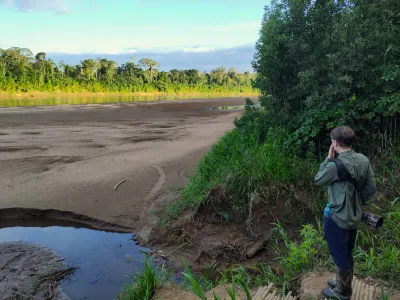
I am based at the Cocha Cashu Biological Station, a remote research station inside Manu National Park in the southeastern Peruvian Amazon. The station sits on the edge of an oxbow lake at around 330 meters above sea level, surrounded by lowland tropical rainforest. My field phase runs from June through October 2026. After traveling for nearly three days from Cusco, through the Andean mountain range, down through the cloud forest, and down the river all the way to Cocha Cashu, I am now in the midst of data collection.
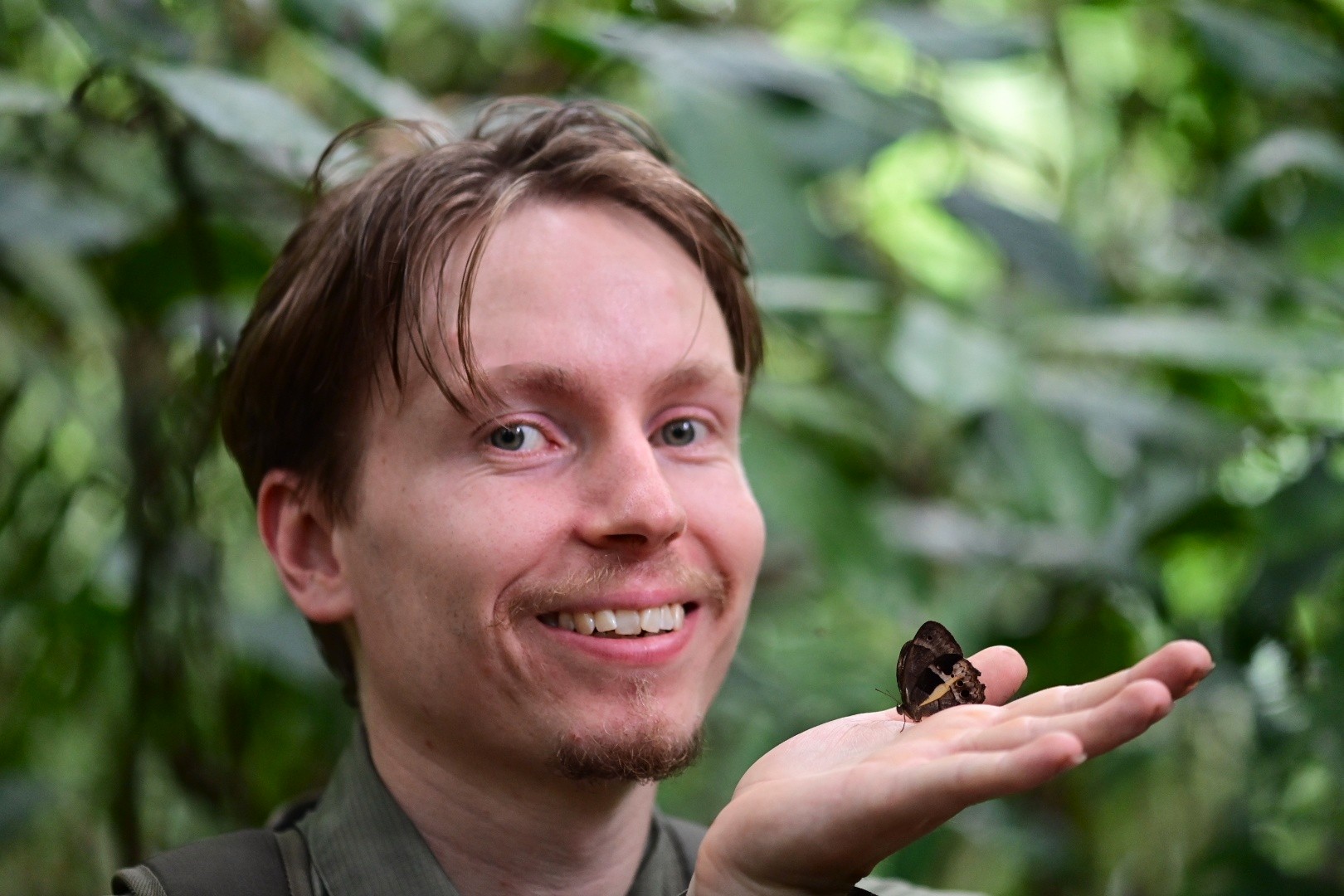
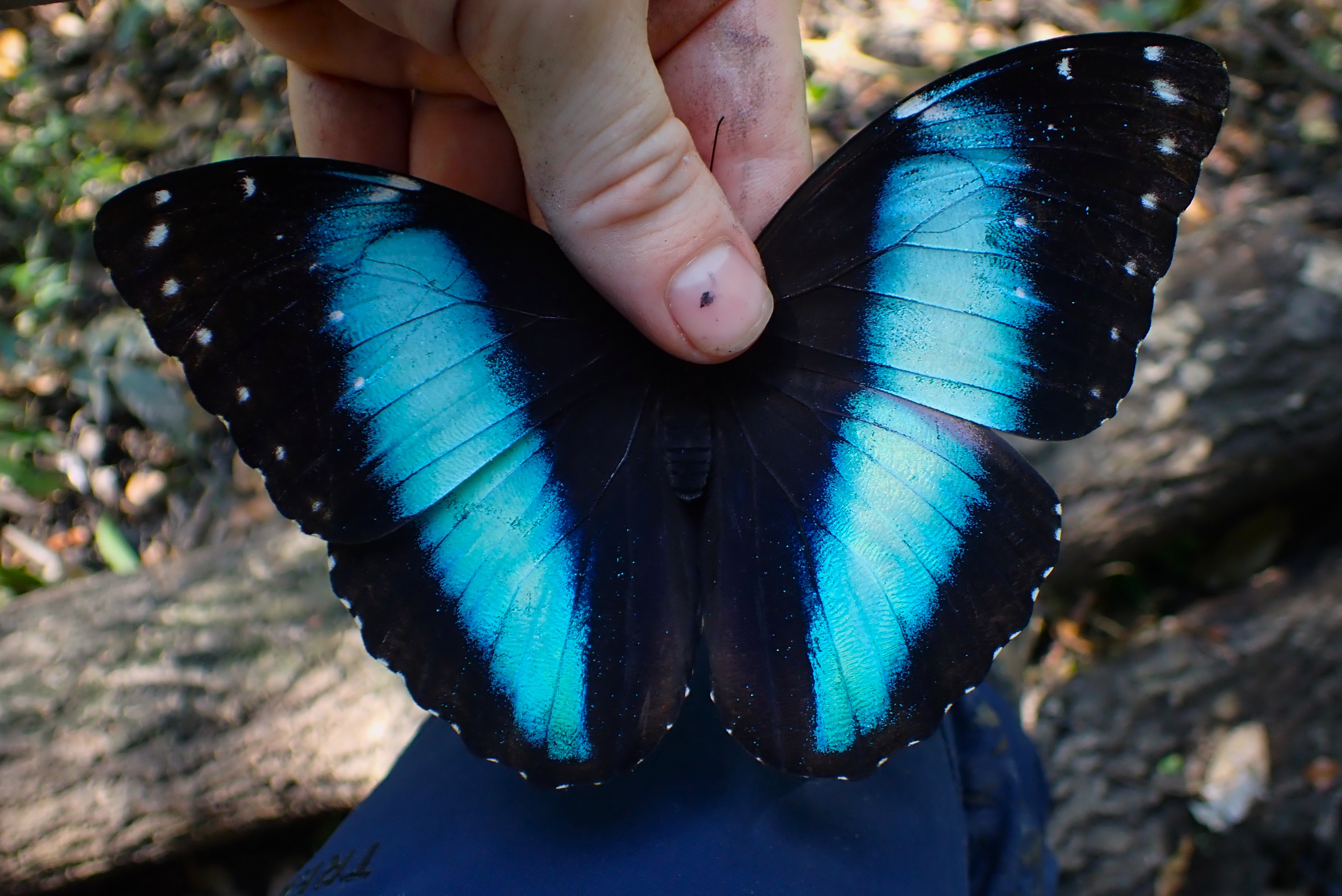
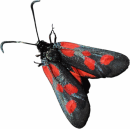
The work itself combines butterfly trapping with vegetation surveying. I am running 60 Van Someren traps baited with fermented banana, spread across six distinct understory vegetation types along the station's trail system. Every butterfly that comes to a trap is marked, then photographed from both the dorsal and ventral side for identification, before being released.
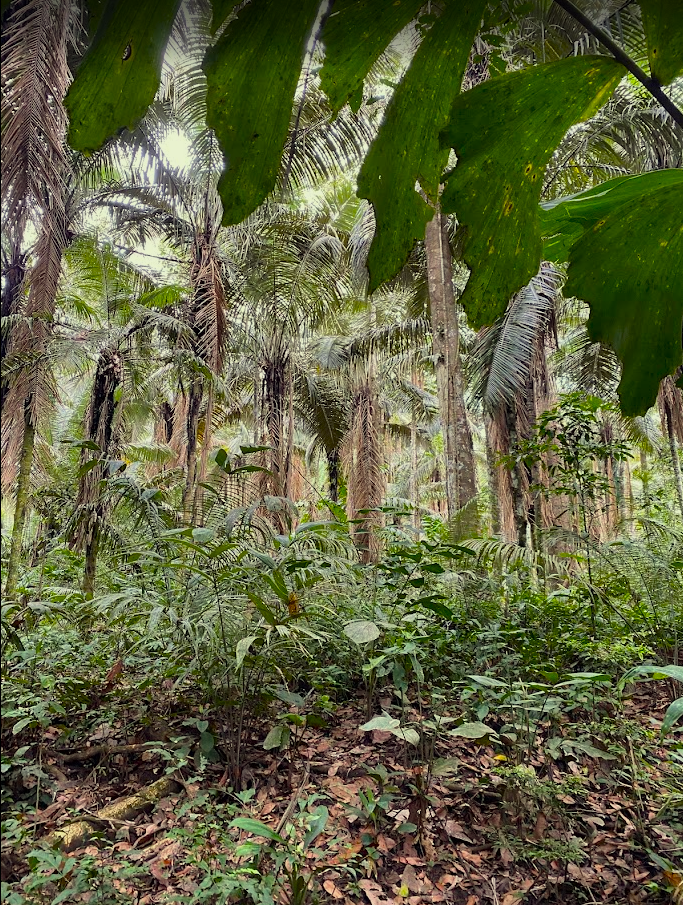
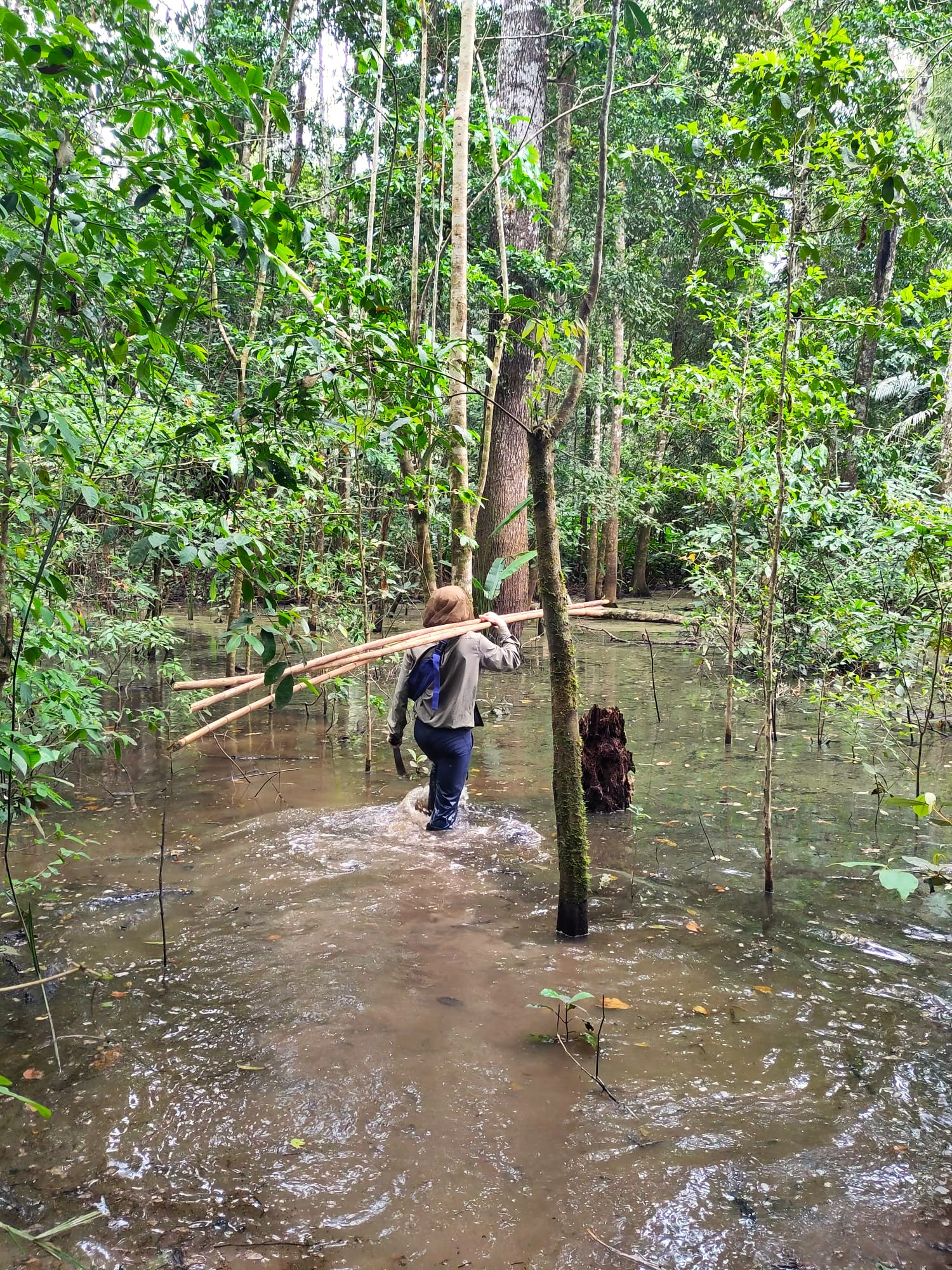
Alongside the trapping, I am mapping the vegetation structure at every trap site using nested plots, recording everything from the largest canopy trees down to seedlings, ferns, lianas, and herbs. Once I am back, I will finish up the identification and start the analysis. Some days take me through several of these vegetation types in just a few hours. I might spend the morning walking through an area dominated by palms, then push through a thick wall of Heliconia soon after, leaves brushing past at head height. By the afternoon I can end up wading through swamp water up to my hips, before finally reaching drier ground again.
The experience itself is unfathomable. Monkeys throw themselves from tree to tree, howler monkeys howl through the forest, and the sheer number of butterfly species and their beautiful patterns is mind-boggling. Walking 15 km a day lets me experience more in a week than most people do in months. A camera trap caught a puma passing through, and twelve minutes later it caught me walking through the exact same spot.
Emil Ideskär