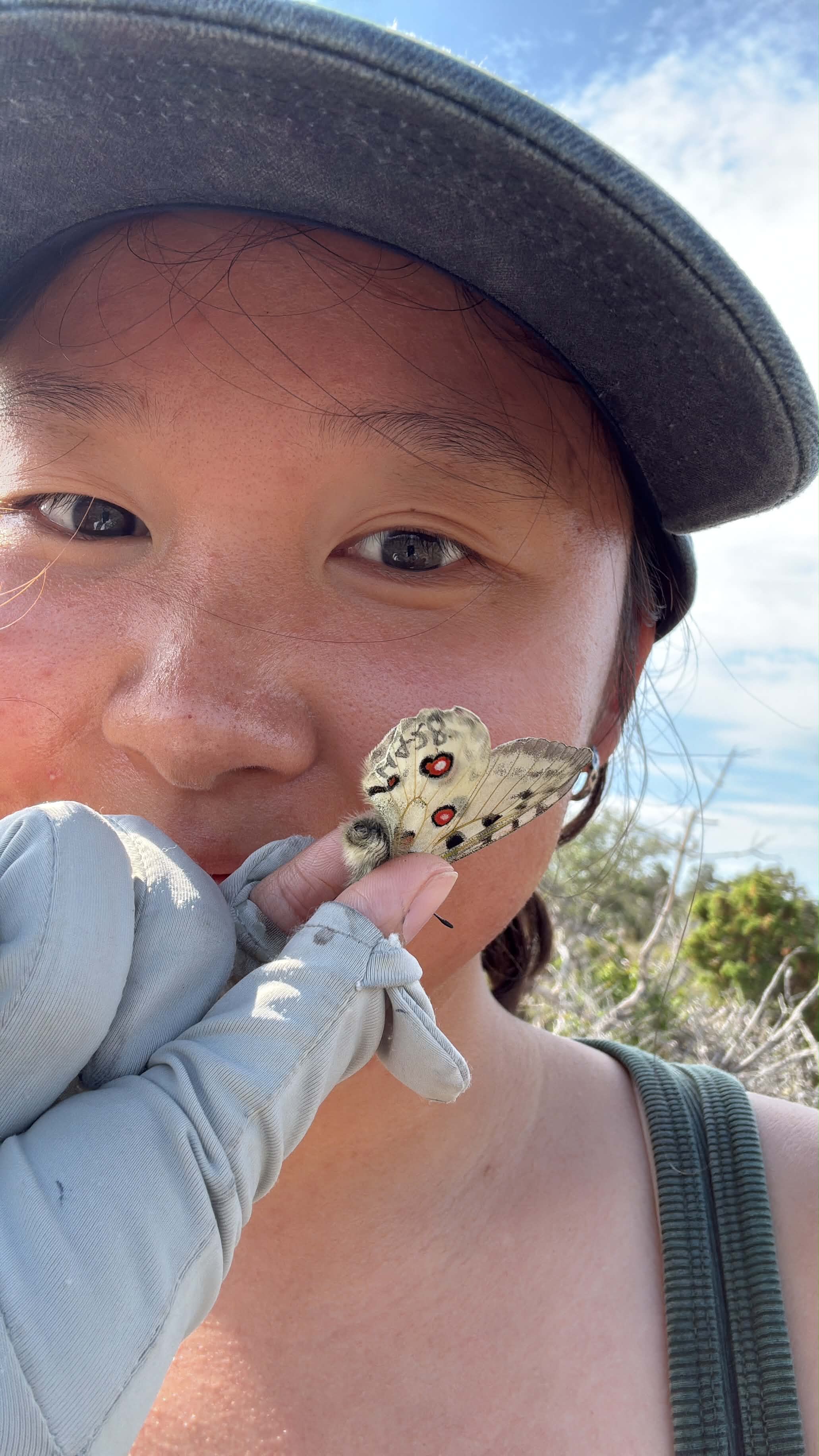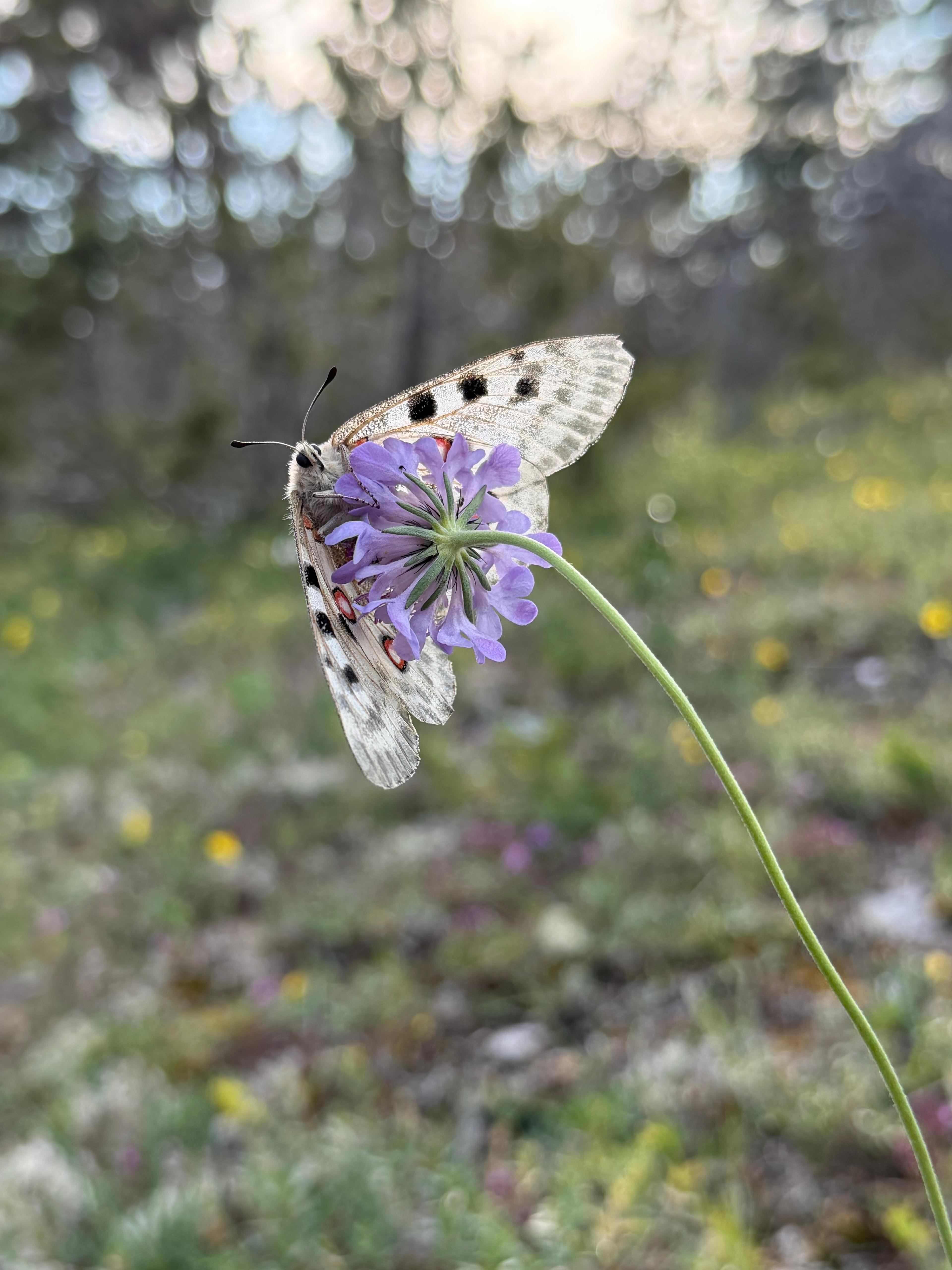
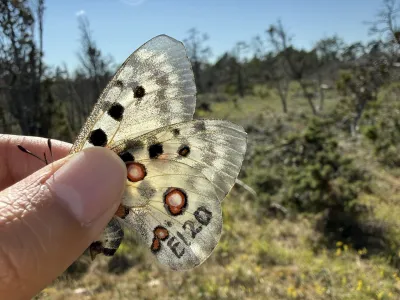
MSc student Qianyu Hu from Linköping university tells about her fieldwork, which was conducted on Gotland! For about a month in field, Qianyu investigated P. apollo, supervised by Markus Franzén. Using the method of capture-mark-recapture, an impressive number of over 4.000 individuals were marked in the study.
Research questions
This study aims to address the following questions:
- How does nectar plant availability affect the distribution and density of adult P. apollo?
- How does nectar abundance and floral colour preference shape the habitat use of adult P. apollo?
- How does nectar abundance and host plant availability jointly influence oviposition site selection?
- Are there sex-specific differences in nectar preference?
- Which habitat features should be prioritized to support sustainable populations?
Method
The investigation was conducted at the sites File Hajdar and Hejnum Hällar which are close to Slite on the Gotland. Data was collected within three fixed focus areas of 300 m x300 m grid cells that were already established in three sites (Core Area, Hejnum North, Hejnum South) during the adult flight season (mid - June to mid - July) on sunny days between 09:00 to 17:00. All the captured individuals and associated data was added to the ArcGIS map.
Nectar resource availability
The nectar resource availability within each grid cell was assessed by manually recording floral abundance of all flowering plants within the sampling area. Each grid cell contains nine evenly distributed nectar measurement sites. Flowering plants within an 80 cm diameter circle around the site was recorded. Initial survey was conducted at the end of May and repeated bi-weekly to encompass the full phenology of all flowering species throughout the study period.
Population distribution, density and behaviour
Population distribution and density was assessed using capture-mark-recapture (CMR) methods within each grid cell. The CMR was conducted daily in favourable weather conditions, specifically over a minimum temperature of 17°C, low wind speeds and without persistent cloud cover or rainfall. Individuals was captured carefully with a hand net and was marked with a unique code on the ventral hindwing with a permanent marker. CMR was applied in an irregular zig-zag route between each nectar measurement site with the aim of covering suitable habitat that the species utilizes. Sex, weather, species of visited plant and behaviour at first sighting was recorded.
Highlights
- Over 6,000 data points have been recorded and over 4,000 individuals have been marked.
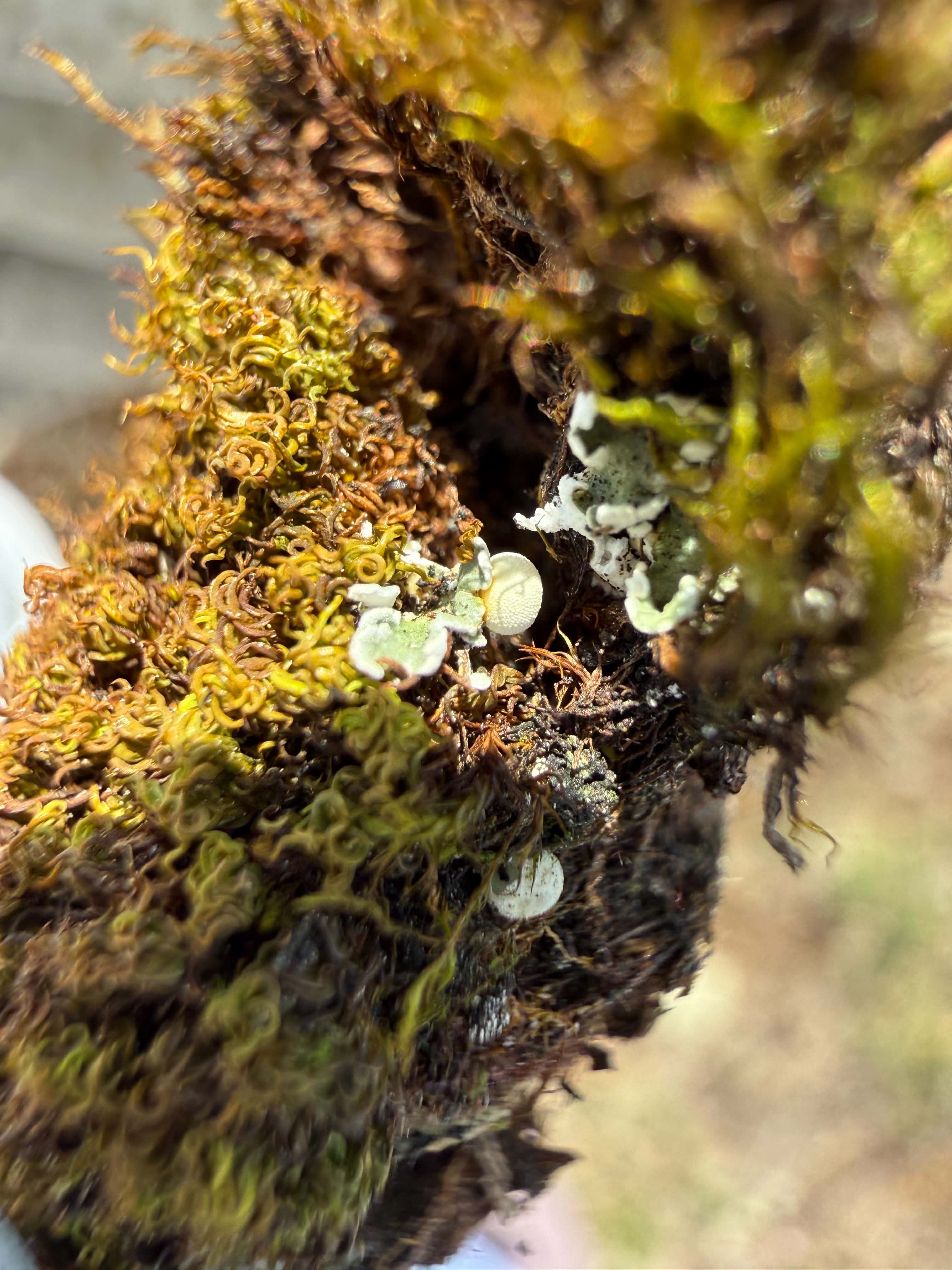
- Several egg-laying events have been witnessed and recorded. Juniper and moss near its host plant, Sedum album, were popular egg-laying places. One egg was found right under the Sedum album, which is really rare and irregular.
- The recapture rate was extremely high this year. The Core Area got the highest recapture rate of approximately 30%, the Hejnum South was the lowest. As a reference, the recapture rate of previous years has usually been 2%-5%.
- Cameras were put in front of orchids in four different areas which made it possible to observe several visiting events from Apollo butterflies.
Qianyu Hu