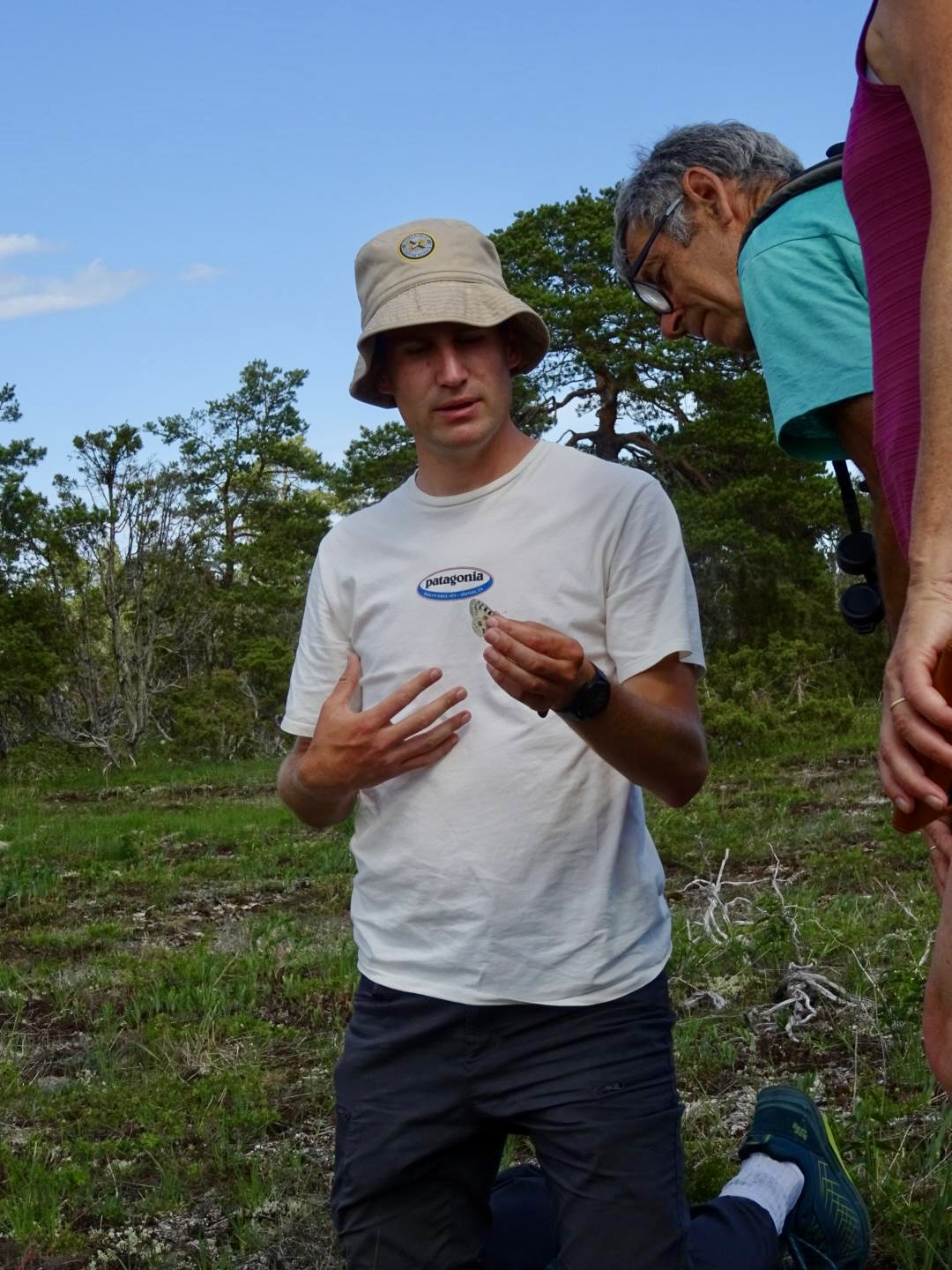
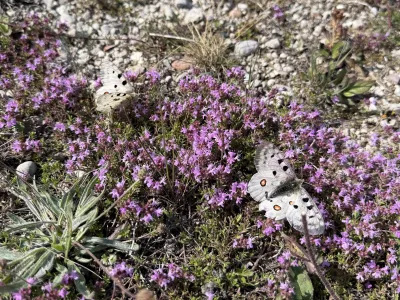
This year the Parnassius apollo was not only studied by one MSc student, but by two, having Markus Franzén as their supervisor. Thomas Schuurman, studying at Radboud University in the Netherlands, conducted fieldwork investigating predation on P. apollo caterpillars and nectar plant preference of adults. From initial analyses, interesting patterns in nectar plant use have been revealed. We look forward to seeing the full results!
Understanding the ecological factors that affect the survival and population dynamics of species is essential for conserving them successfully. This is especially important for species with declining population trends, such as the Apollo butterfly (Parnassius apollo). During the 2026 field season on Gotland, I focused on two topics: predation on caterpillars, and nectar plant use of adults.
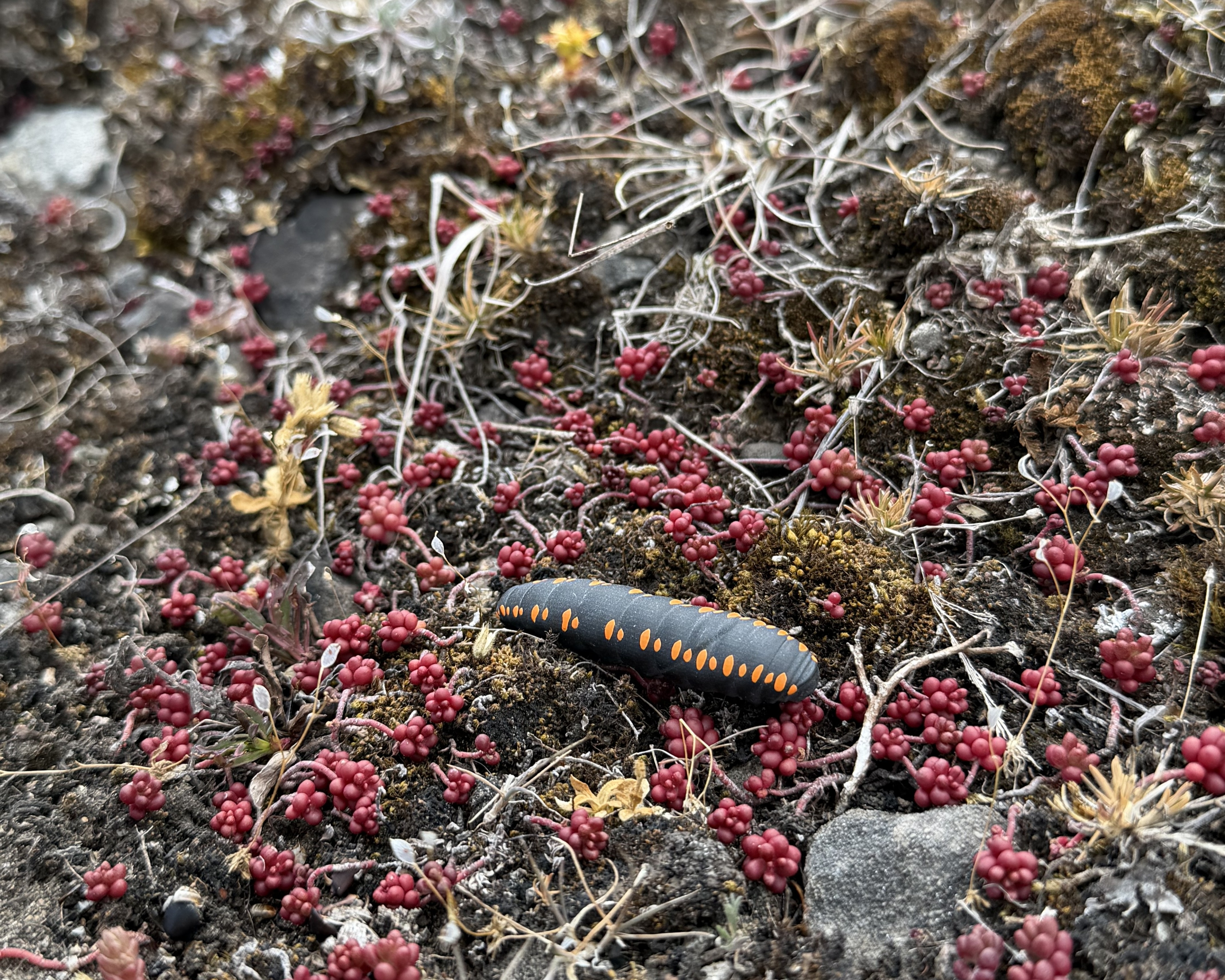
Using motion-triggered cameras and artificial 3D caterpillars, I aimed to gain a better understanding of whether and how often caterpillars were attacked. Although this pilot study yielded relatively few predation events, it was insightful for the ecology of the species. Open questions remain, such as whether Apollo caterpillars are genuinely eaten, or only when other bird food resources are scarce, and whether their bright orange patterns serve as effective warning colouration.
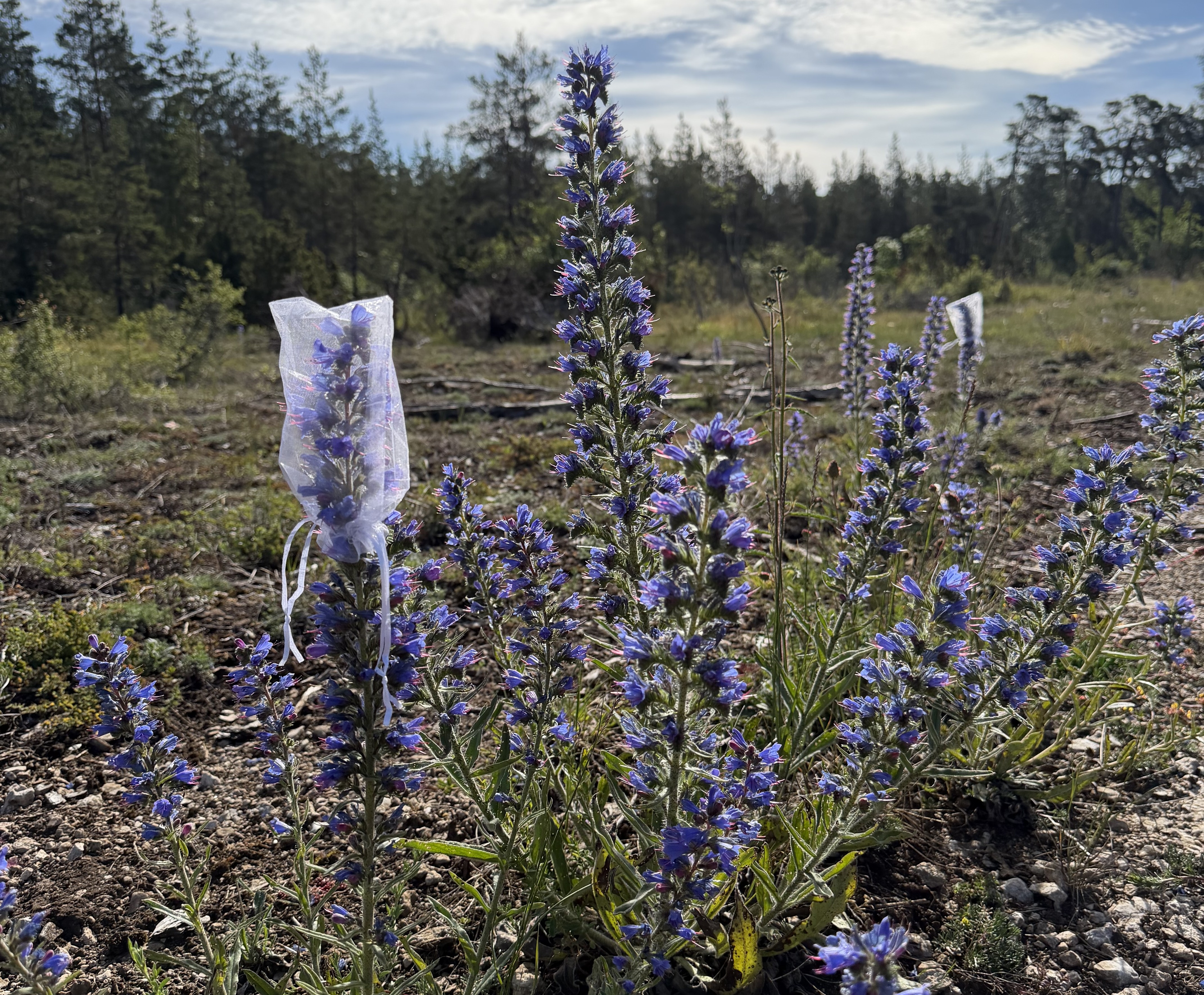
To survive and reproduce, adult butterflies depend on nectar as their primary food source. However, butterflies are not purely generalist foragers, and flower visitation has been shown to be shaped by several floral traits. Using feeding observations collected during capture-mark-recapture (CMR) surveys, we recorded which flowers Apollos visited. I also measured the nectar sugar content of a range of flower species, both frequently visited and unvisited, and estimated the relative abundance of each species over the season. By combining these data, I aim to assess whether Apollo's flower use is driven mainly by the local abundance of flowering species or whether nectar sugar production is an additional predictor, and whether this differs between sexes and changes over the season.
Finally, it has been hypothesised that Apollos move to flower-rich road verges outside their breeding areas during periods of drought or local food scarcity. To test this, I also conducted CMR along the road verges bordering the study areas, to detect movement between the breeding areas and the verges. Together, these data offer a detailed picture of Apollo foraging on Gotland, and initial analyses have already revealed interesting patterns in nectar plant use that we are now examining in more detail.
Thomas Schuurman