Semi-natural grasslands are important for biodiversity but are increasingly threatened by land-use changes and abandonment. Grazing is essential for maintaining these habitats, but managing grazing intensity and timing to meet conservation goals can be challenging. A new study, co-authored by Biodiversa member Victor Johansson, investigates how virtual fencing could be used as a tool for more targeted grassland management.
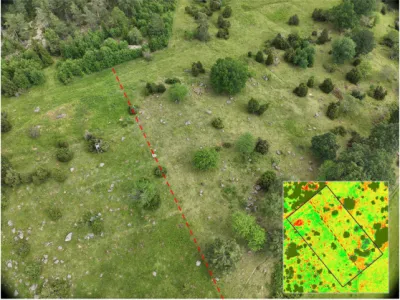
Virtual fencing uses GPS-tracked collars on livestock to control grazing areas through invisible digital boundaries. In this case study, researchers combined cattle movement data with drone-based vegetation analyses and field surveys of flowering plants and pollinators to investigate how grazing patterns affect vegetation and biodiversity.
The results show that virtual fencing can regulate grazing pressure and create short-term variation in vegetation structure and flower abundance. However, no clear relationship between grazing patterns and pollinator numbers was found. The study highlights both the potential and limitations of virtual fencing and provides insights into how the technology could be further explored for more flexible and ecologically tailored grassland management.